FOR THE OLD THINGS YOU HAVE NOT LOOKED AT PROPERLY YET
Before you call it junk,
know what you’re giving away.
The tool on the bench. The bottle on the shelf. The box your family wants gone.
You do not have to keep it all. But before you sell it cheap, donate it, or put it out for collection, learn which details deserve a second look.
The Junk-to-Jackpot Ledger shows you where to start, what to check, how to research sold prices, and how to choose a selling route that leaves more of the sale in your hands.
292 illustrated pages · English PDF · One-time purchase
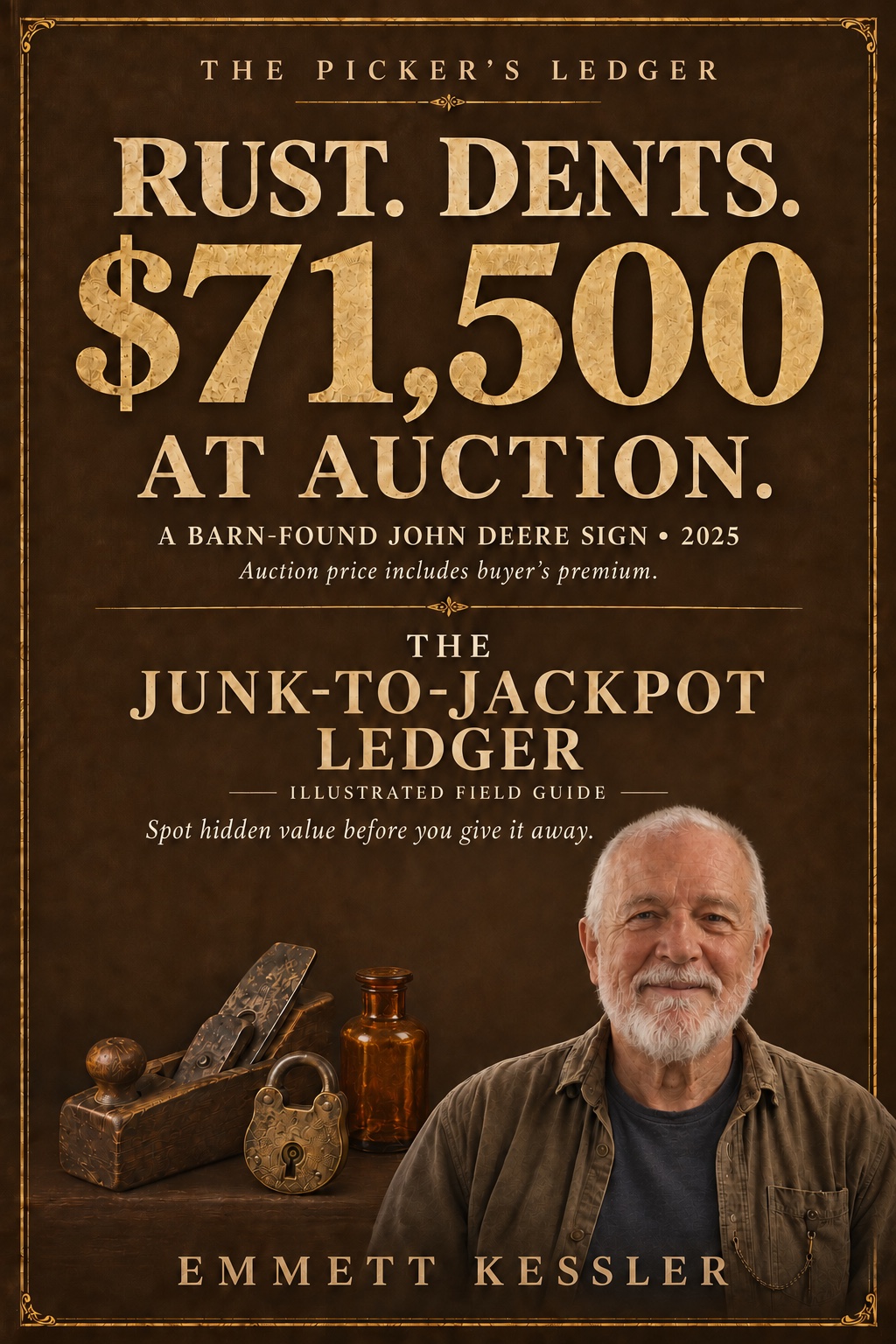
Digital PDF · No physical book is shipped
The box is easy to clear.
The mistake is harder to undo.
You are halfway through the garage. There is a donation pile, a rubbish pile, and a few things you might put in a sale. You pick up something old. It is dirty, unfamiliar, and nobody in the family wants it.
What do you do with it?
If your only test is whether it looks valuable, you are deciding before you have checked. A worn tool can carry a maker’s mark you have never heard of. The underside can tell a different story from the front. An original piece can matter more than a clean finish.
You do not need to assume it is valuable. You need a way to find out whether it deserves your time.
That is what the Ledger is for. It helps you turn “I have no idea” into a useful next step—while the object is still yours to decide about.
Here is the book.
Open it before you decide.
These are three actual pages from the Ledger. Look at the first check, the details to notice, and the selling costs. Picture having them beside you when you open the next drawer.
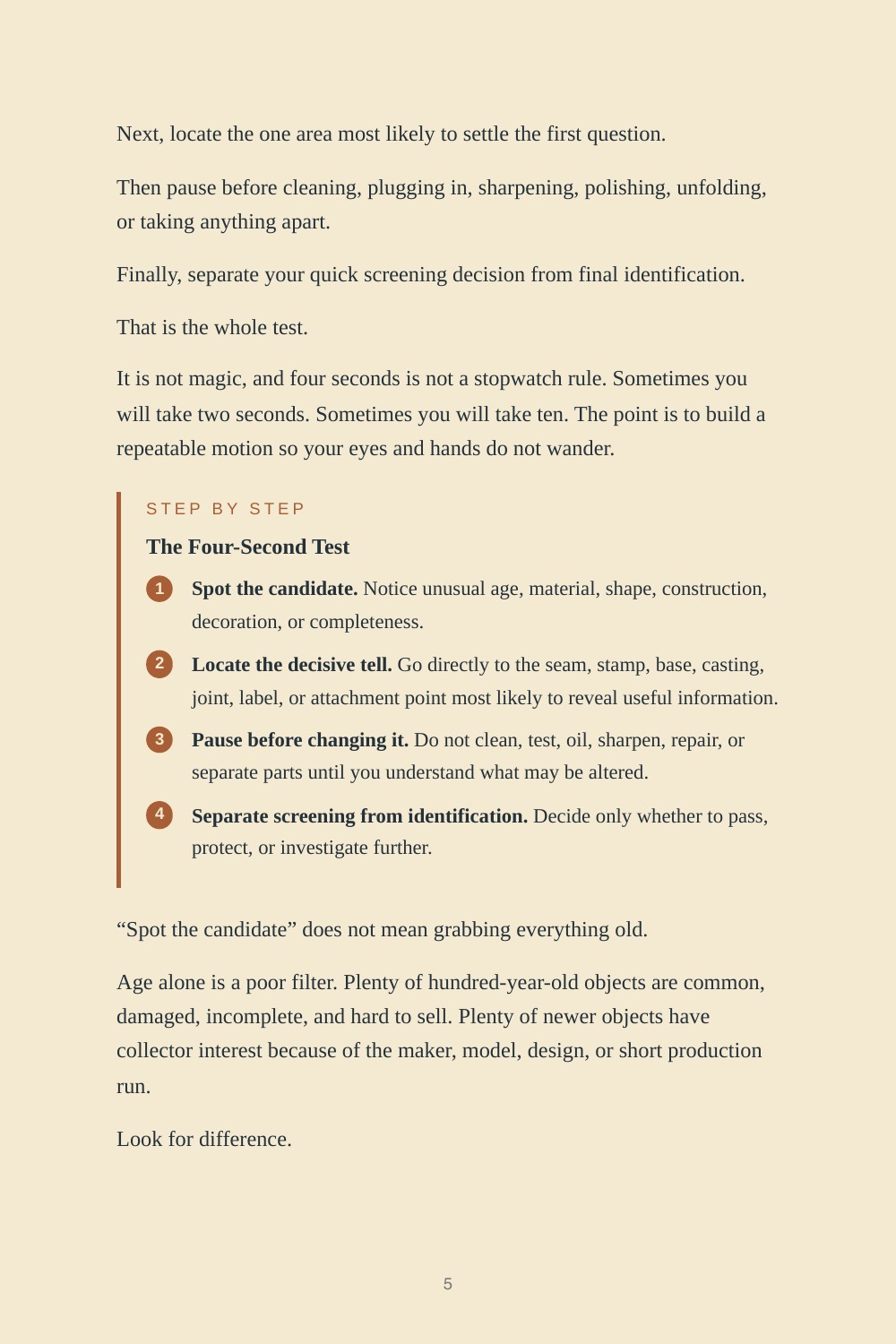
Start with the first check
What deserves a pause before you put it in the pile?
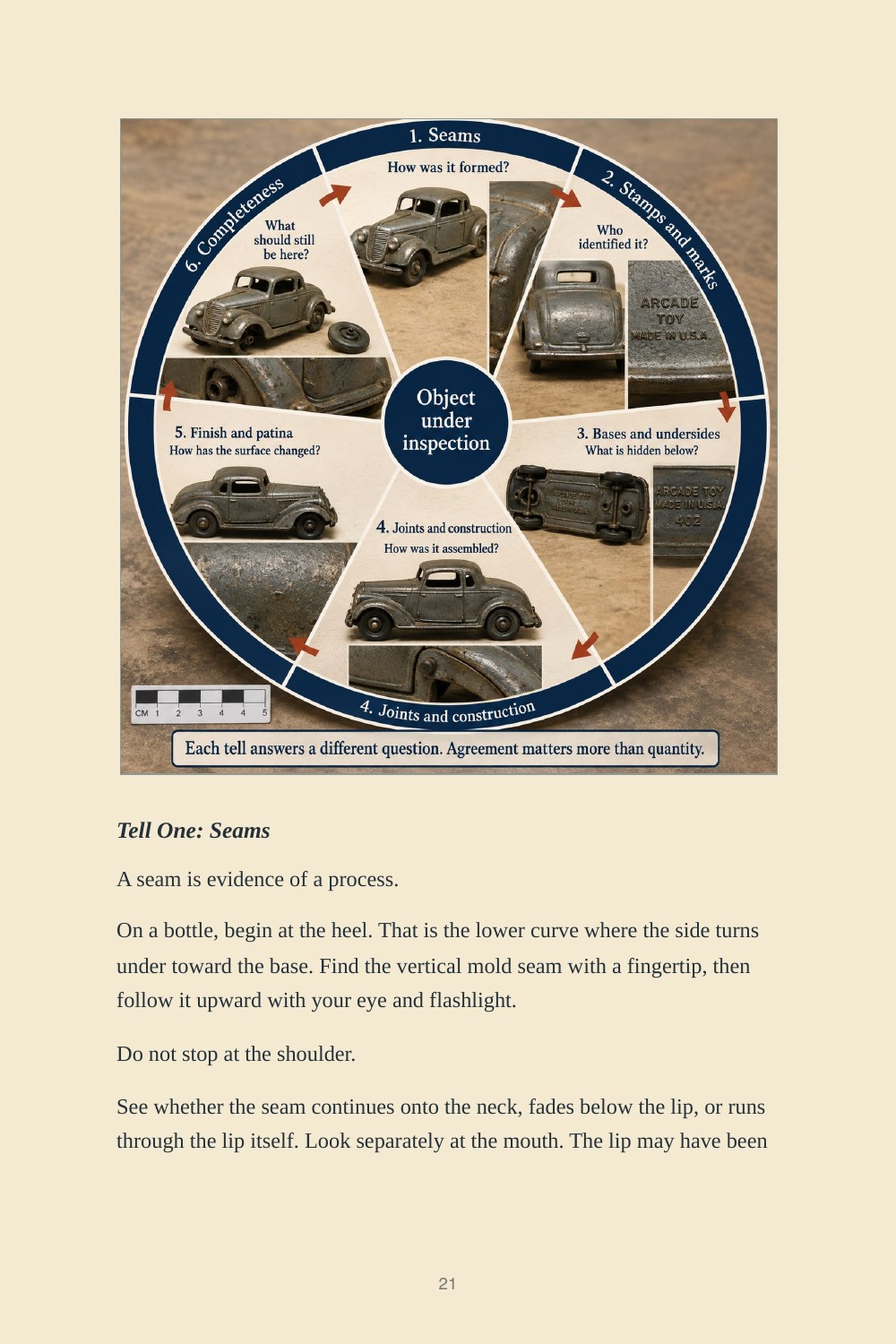
Know what to inspect
What detail should send you looking for more information?
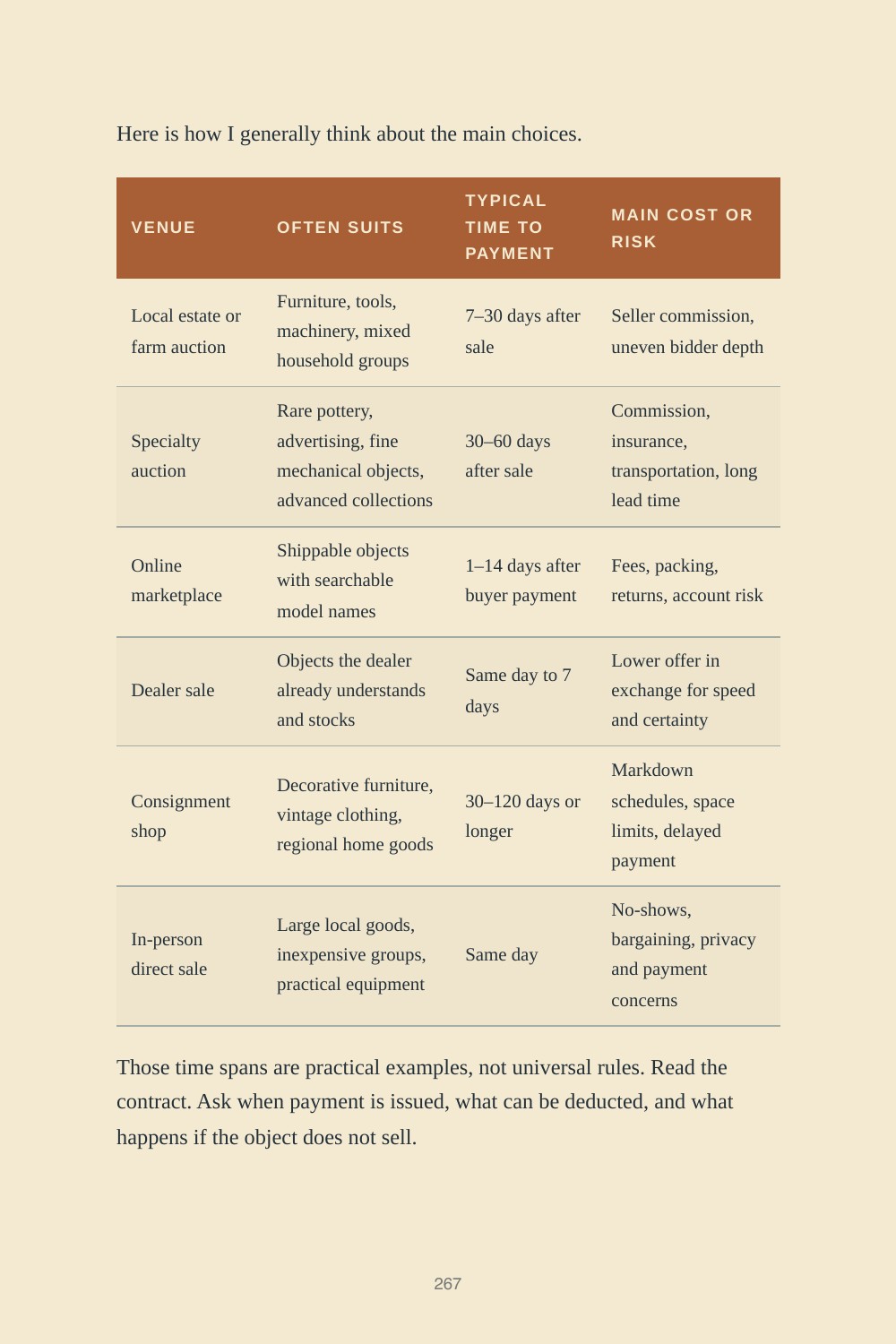
Work out what you keep
What does the selling route take out of the price?
292 illustrated pages · English PDF · One-time purchase
What you will know to check
before the next thing leaves.
The Ledger takes you from the first look to the selling decision. Not every object needs hours of research. The point is to stop guessing which ones do.
- Where to begin when you know nothing about the object. The Four-Second Test gives you a first check. You are looking for a reason to pause, not trying to become an appraiser in four seconds.
- What to look at beyond “old” and “dusty.” The Six Tells give your eyes a job: inspect the details before you decide what the object is.
- Why the price you found online may be the wrong comparison. Learn to research completed sales and put identity, condition, and demand beside the number.
- What to do before you clean it or separate the pieces. Pause. Keep related parts together. Establish what you have before changing what a buyer would see.
- How to choose between selling routes. Marketplace, auction, specialist, or dealer: compare the costs and effort as well as the offer.
- How to keep the next step from getting lost in the pile. Working-ledger guidance and practical checklists help you track the objects that need another look.
You can start in the room you are clearing.
Nine places to look, each with its own chapter. Open the relevant one and work with the things in front of you. The numbers below are PDF page numbers.
- Barn & outbuildingsp. 54
- Workshop & toolbenchp. 78
- Garagep. 101
- Atticp. 122
- Basement & cellarp. 141
- Kitchen & pantryp. 160
- Closets & dressersp. 180
- Junk drawer & small boxesp. 200
- Walls & around the housep. 217
292 illustrated pages. Sixteen chapters. One book you can return to. Start with the first checks, move to a room, and come back to the research and selling guidance when you need it.
What are you buying
for $17.99?
A place to turn when you have an object in your hand and a decision to make.
You can search the internet for a price. But first you need a useful question: What is this? Which detail identifies it? Is that completed sale actually comparable? What will the sale cost me?
The Ledger puts those questions in order. The first checks, the room-by-room guidance, and the selling decisions stay together. You can use it during this cleanout and open it again when the next box turns up.
Use it before you accept an offer, before you pay for an unfamiliar piece, and before you clear the next shelf. The book stays useful because those decisions keep coming.
292 illustrated pages · English PDF · One-time purchase
What readers are saying
Feedback from Facebook readers who received a reading copy.
“Got the book yesterday afternoon and couldn’t put it down. My husband and I tune into every single episode. Thanks for making this hobby feel approachable for folks like us.”
“Still regular viewers all the way out here in Abilene, Texas. Heading into an estate cleanout this weekend, and for once, we actually feel like we know what we're looking at.”
“No questions from me, just wanted to say thanks. My grandfather worked forty years in an engine plant and left behind boxes of vintage hand tools we all ignored for years. Reading this made me walk out to the garage and look at every single wrench with fresh respect.”
“Laminated the field guide cheat sheet and tossed it straight into the truck console. Emmett isn't selling overnight riches or TV fantasies; he writes like a guy who’s actually ruined a pair of boots in a wet barn. Worth every penny.”
“Any guide that admits 90% of old shop clutter is twenty-dollar iron earns my trust immediately. If someone tells the truth about the common stuff, I'll believe him on the rare finds. Clean download, clicked open right on my phone without jumping through hoops.”
“Partner ordered it. I skimmed the 'what to leave behind' section. Direct, grounded, no fluff. Exactly what it should be.”
“The maker’s mark breakdown alone covers the cost. When you're crouched under a workbench with a flashlight and five minutes, the quick-index in the back is a lifesaver. Clean, legible layout even in lousy shed light.”
“Got two rusty skillets sitting on my basement shelf right now. The cast iron section cuts straight through the collector noise—shows you ordinary iron versus the piece that matters with an instant checklist. Five stars for the practical structure alone.”
“Flipped right to advertising tins and oil cans. Refreshing to see realistic settled prices instead of eBay asking prices pulled out of thin air. Real-world numbers you can actually negotiate with.”
*Edited with the publisher’s approval: Brenda’s reference to postal delivery was removed; Cal’s author reference was corrected to Emmett.
Get The Junk-to-Jackpot Ledger
THE COMPLETE BOOK · BY EMMETT KESSLER
One PDF.
From “what is this?”
to “what should I do next?”
- 292 illustrated pages in English
- 16 chapters, including 9 places to look
- The Four-Second Test and Six Tells
- Completed-sale research and selling guidance
- Working-ledger guidance and practical checklists
$17.99One-time payment. No subscription.
Get my Ledger · $17.99Digital PDF for your phone, tablet, or computer. No physical book is shipped.

Emmett Kessler
Author and host of The Picker’s Ledger.
The approach is practical: notice the clue, check the identity, look for completed sales, and understand the costs before deciding.
This book brings that approach into the rooms you are sorting. Keep it close enough to consult while the objects are still in front of you.
Before you buy
The next box does not need
another guess.
Before you write a price on it, put it in the donation pile, or agree to let it go, give yourself a way to check.
Get the Ledger for $17.99. Start with one drawer.
292 illustrated pages · English PDF · One-time purchase
P.S. You do not have to keep a house full of old things. You want to make the decision with more than a shrug.